Starting a Career in Conservation: What Megan Learnt By Volunteering With Us


Megan Quinn
Megan's Experience
I’m Megan, a recent Zoology graduate who is currently trying to figure out what comes next. I have always loved wildlife, but one thing I’ve learnt recently is that knowing you want to work in conservation and actually getting your foot in the door are two very different things.

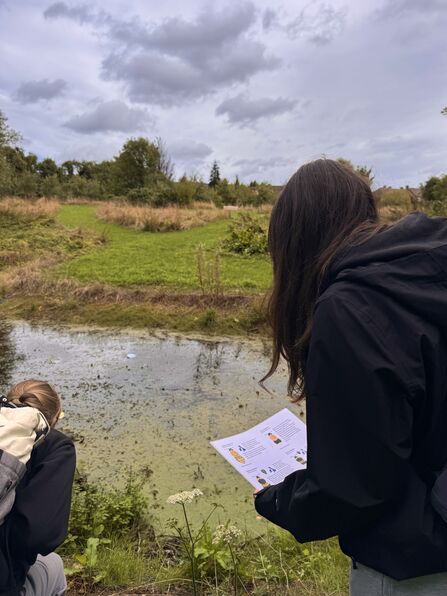
Water quality testing - Megan Quinn
During University, I knew I needed more experience if I wanted to work in the environment and wildlife sector. I wasn't quite sure where to start, so I looked for organisations in my local area and came across Warwickshire Wildlife Trust. In particular, I joined the Sherbourne Valley Project, a local conservation project which aims to restore and reconnect people with the River Sherbourne. I began volunteering with a friend, which made taking that first step a lot less daunting. Since graduating and moving back home, I've been able to attend more regularly, and it’s probably one of the best decisions I’ve ever made.
What have I done?
As a volunteer with Warwickshire Wildlife Trust, there are so many different activities to take part in, offering a wide range of ways to get involved in conservation and gain different experiences.
1.Bumblebee Survey
For example, I have taken part in a bumblebee survey at Charterhouse, a National Trust site, where we worked through several areas looking for and identifying different species. We were given identification guides and nets, and worked together as a team to identify the bumblebees we caught.
There were plenty of distractions along the way too! We accidentally caught a grasshopper and even came across a bunch of rosemary beetles while searching the lavender for bees. Not quite what we were looking for, but still pretty cool.
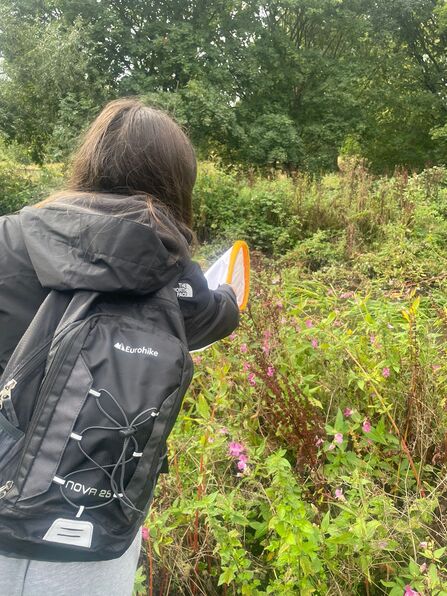
Using a net to survey bumblebees - Megan Quinn
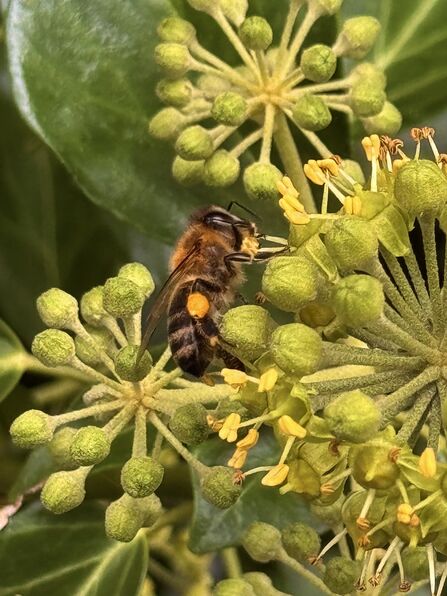
Bumblebee with nectar on leg - Megan Quinn
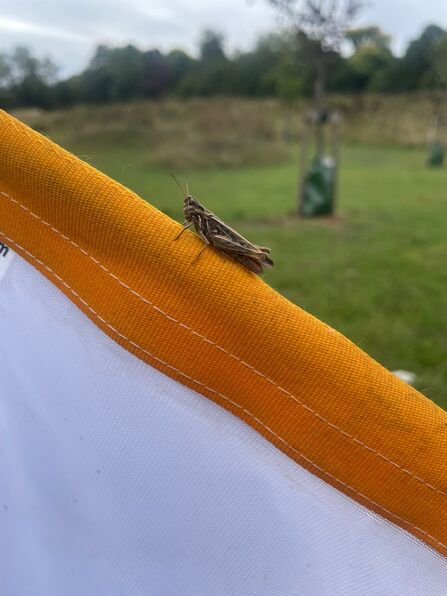
Grasshopper on net - Megan Quinn
Using a bumblebee ID sheet - Megan Quinn
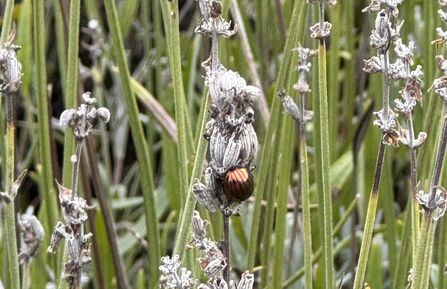
Rosemary beetle on Lavender - Megan Quinn
2. Otter Survey
During the Autumn RiverFest, a celebration of the River Sherbourne, I also joined an otter walk. Along the way, we talked about otters, their habitats and what makes an area suitable for them.
We were encouraged to look around the river and surrounding environment and think about whether it would provide enough food, shelter and protection for the otters.
It was a really enjoyable way to learn more about them and get a better understanding of their habitats.
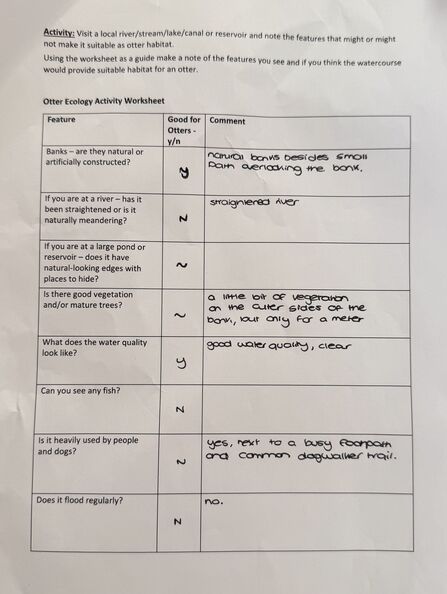
Completed otter survey worksheet - Megan Quinn
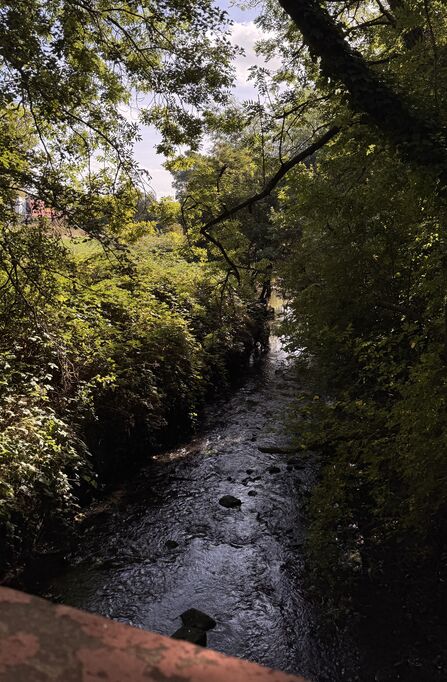
River Sherbourne from Charterhouse bridge - Megan Quinn
3. Invasive Species Removal
I've also taken part in practical conservation work, which typically involves the removal of invasive species. At Guphill Brooke, we have removed variegated yellow archangel and box honeysuckle. This proved to be quite difficult, as this species has an annoying habit of snapping before you get the roots out.
After a morning of making our way through the invasive plants, we stopped for lunch and looked back at how much we had cleared. It was surprisingly satisfying to see the difference a small group could make in just a few hours.
And then there was the mystery of the buried bin bag… What initially looked like a small pile of rubbish turned out to be a large, buried and degraded bin bag filled with bulbs. As a group, we took on the task of figuring out what had been dumped and removing as much as possible.
It was a tedious task but really rewarding when we finally removed all the pieces.
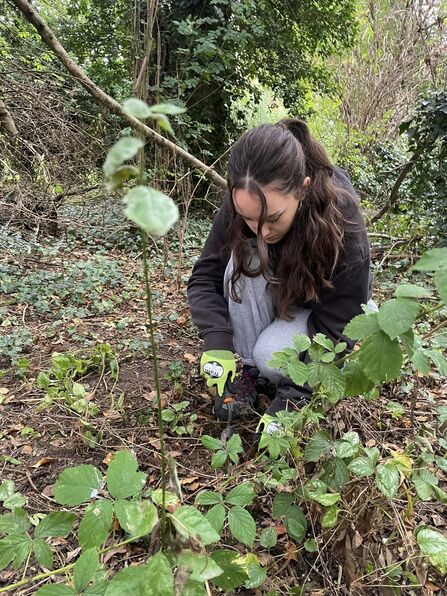
Removing invasive species - Megan Quinn
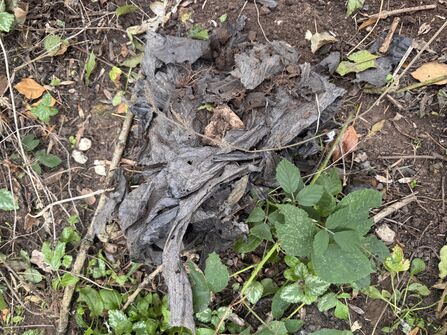
Mystery black bin bag at Guphill Brooke - Megan Quinn

Variegated yellow archangel & box honeysuckle removal - Megan Quinn
Another day of practical conservation work involved tackling Himalayan balsam and overgrown vegetation around one of the ponds at Charterhouse. We worked along the footpath, using hedge trimmers to cut back the vegetation before raking and clearing the debris.

Removing overgrown vegetation - Megan Quinn
It was a surprisingly hot September afternoon, but with a large group of volunteers we made quick progress. What I wasn’t expecting was to also get involved in a water survey of the River Sherbourne, where we checked nitrate and phosphate levels. This was something completely different from the practical habitat work we’d been doing.
I really enjoyed getting the chance to try some environmental monitoring and see another side of conservation work that I hadn’t experienced before.
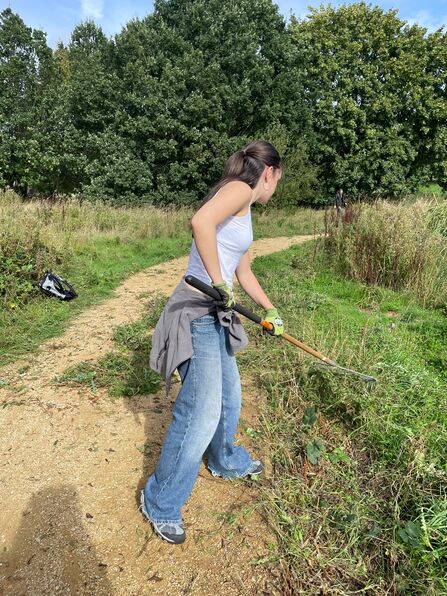
Removing overgrown vegetation - Megan Quinn
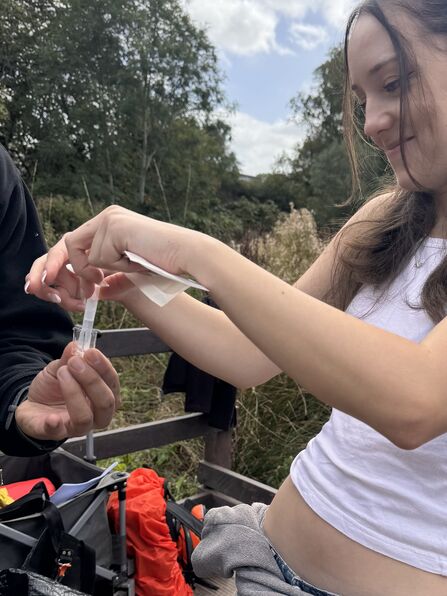
Testing the water quality of river Sherbourne - Megan Quinn
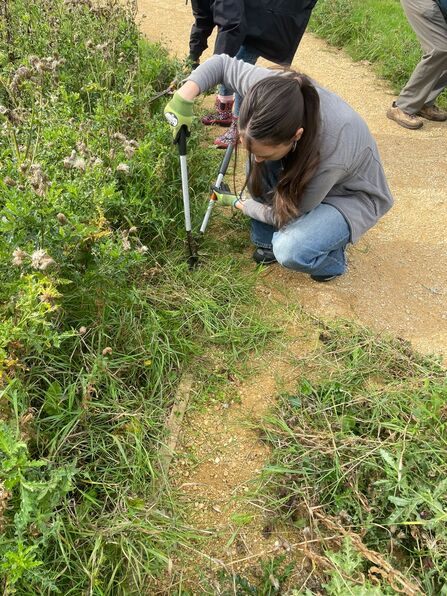
Removing himalayan balsam - Megan Quinn
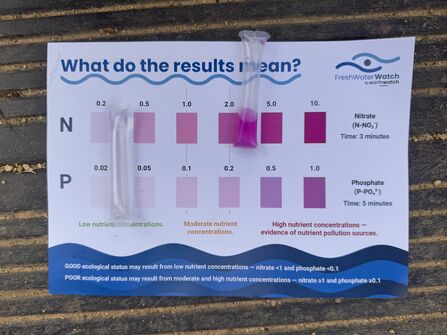
Water quality results - Megan Quinn
What have I learnt?
The biggest thing I’ve learnt is that you don't need to know everything before you start. Volunteering with Warwickshire Wildlife Trust has given me the chance to take what I learnt during my Zoology degree and apply it in a completely different setting. I’ve also learnt from people with far more practical experience than me, simply by working alongside them.
What surprised me most about volunteering was how welcoming everyone was. I've met people at completely different stages of their conservation journeys, and talking to other volunteers and group leaders has introduced me to opportunities I probably wouldn't have found otherwise. For instance, one of the Warwickshire Wildlife Trust interns recently encouraged me to get involved with dormice surveys. This was something I hadn’t really considered before as I wasn’t sure how to get started. That experience has since encouraged me to pursue my dormice licence, as well as look into other protected species licences.
Being involved in such a wide range of activities has also made me realise just how much work goes into conservation. There are wildlife surveys, habitat management, invasive species control, litter removal and plenty of other jobs you probably don't think of until you're actually out there doing them.
Most importantly, volunteering has made the gap between finishing university and starting a career feel a little less overwhelming. The graduate job search can be frustrating, but getting outside, learning something new and contributing to a local project gives you something positive to work towards while you’re figuring out your next step.
What's my next steps?
I am still very much at the beginning of my conservation journey, and I’m hoping to keep building on the experience I’ve gained through Warwickshire Wildlife Trust.
If you're in a similar position, my biggest piece of advice would be to start asking questions and get involved. You don't need to have your whole career mapped out before taking your first step.
Sometimes you just need to start somewhere.
As it has been for more than half a century, the Trust depends on the dedication and kindness of our volunteers' time. Only with their help will we meet our goals of creating more space for nature by helping more people take more positive action for wildlife.CEO Warwickshire Wildlife Trust
Last year, 37,407 volunteering hours were recorded, which is equivalent to £553,624. Warwickshire Wildlife Trust are incredibly thankful to volunteers like Megan who give their time and energy to volunteer for wildlife.
We hope that this blog showcases how varied and exciting volunteering can be and how, no matter what age or experience, you can get involved too.
Feeling inspired? Check out our available volunteering opportunities