
Ryton Wood carpark is no longer available for member access and is now a staff management and maintenance car park only. Ryton Wood can be accessed via nearby Bubbenhall and Wappenbury nature reserves. We apologise for any inconvenience caused. Should you have any concerns about this, please contact us at enquiries@wkwt.org.uk

Ryton Wood Kate Sugden

Tortoiseshell, John Smith
Location
1.5km south of Ryton on Dunsmore

Know before you go
Dogs
When to visit
Opening times
Open at all timesBest time to visit
All year roundAbout the reserve
New Access Update 2026 Onwards
Ryton Wood can be accessed via two nature reserves nearby.
Ryton Wood carpark is no longer available for member access and is now a staff management and maintenance car park only. We apologise for any inconvenience caused. Should you have any concerns about this, please contact us at enquiries@wkwt.org.uk
History of Ryton Wood
Although part of Ryton Wood was lost to sand and gravel extraction in the 1960s, the wood has been returned to its present excellence though traditional management practices, and is one of the county's largest surviving semi-natural ancient woodlands. Arguably the best of the Princethorpe Woods, Ryton Wood covers 85 hectares, has been designated as an SSSI and boasts an extensive list of notable species.
Parts of Ryton Wood date back to the 11th century, so the land may have been wooded since the end of last ice age. Finding coppiced, small-leaved lime stools is evidence to support this. Once the most common tree 5,000 years ago, the species is no longer so common. Huge ditches also indicate the wood’s ancient, medieval boundaries. Forty or so species of tree and shrub have been identified, with oak the dominant tree. An abundance of honeysuckle, our county flower, scrambles through the lower-growing hazel - enjoy its sweet perfume on summer days.
What's it like to visit?
In Spring primrose, wood anemone and yellow pimpernel carpet the woodland floor. The rides though the wood are grassy and bright, bringing extra light for plants such as barren strawberry and common spotted orchid. Broad-leaved helleborine grows well at the dappled edges of the rides. In the large, clear glades there are fabulous bluebell displays.
Ryton Figure of Eight walk
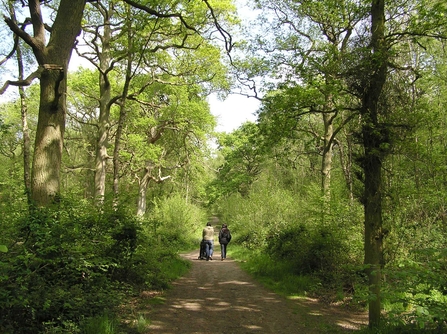
Explore Ryton Wood on the waymarked Figure of Eight trail. Start your walk by heading into Ryton Wood from the Ryton Pools Country Park entrance. Check out the carved totem pole and interpretation board by the gate. Head towards the first waymarker and continue to follow subsequent waymakers as they direct you around the Figure of Eight Trail.
Read the whole trail route and download a leaflet to guide you here.
What might you spot?
For bug-lovers there is plenty of variety to be found in the wood plus its one of the best sites for butterflies in Warwickshire. Species to be seen include white admiral, purple hairstreak and silver-washed fritillary. Regular recordings of moths have recognised an impressive 570 species, of which four are nationally scarce.
Love wildlife? Become a member and make a difference on your doorstep
As a member, your subscription will help look after local wildlife and our amazing nature reserves across Coventry, Warwickshire and Solihull. You'll receive a range of benefits, including free entry to over 65 local nature reserves, with member only free car parks where available, and our Wild Warwickshire magazine three times a year.
Contact us
Environmental designation
Location map
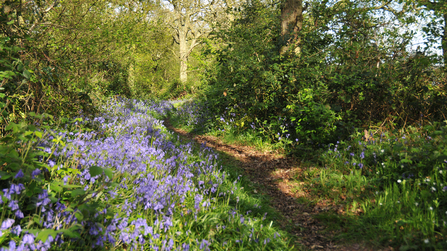
Bluebells at Ryton Wood © Emma Richmond (WWT)
Credit Steven Falk
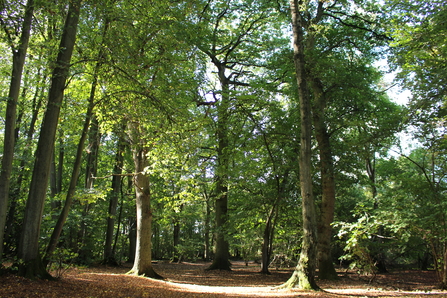
Ryton Wood Kate Sugden


